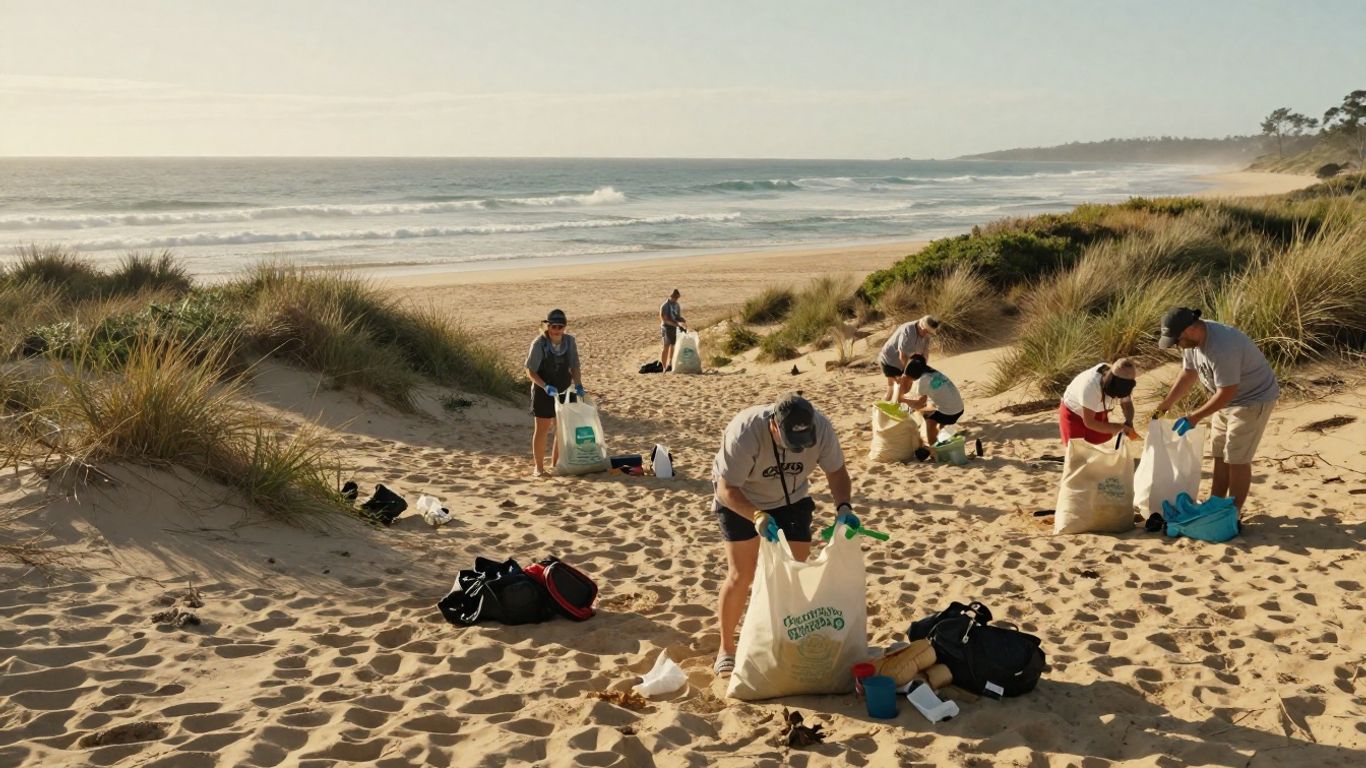
Key Takeaways
A well-planned beach cleanup is safer, more useful, and easier to measure. Use this beach clean up guide to organise the event from the first site visit through to reporting the results.
- Choose a clear, accessible cleanup area and set achievable goals.
- Check permissions, tides, weather, hazards, and emergency arrangements before inviting volunteers.
- Prepare equipment, drinking water, sanitation, waste storage, and transport in advance.
- Give volunteers a concise briefing and divide the work into manageable groups.
- Record what you collect so future cleanups can respond to recurring litter problems.
Set clear goals for your beach cleanup
Start with a simple plan that explains what you are cleaning, why the site needs attention, and what a useful result looks like. A defined scope helps you avoid spreading volunteers too thinly. It also gives you a fair basis for reviewing the event afterwards. Keep the first cleanup manageable rather than trying to cover an entire coastline.
Define the cleanup area and boundaries
Visit the beach before the event and walk the proposed area from end to end. Note access points, paths, dunes, rock platforms, creek mouths, car parks, and places where bags can be safely stored. Mark clear start and finish points so volunteers know where their work begins and ends. Avoid directing people into unstable dunes, private land, deep water, or areas closed for habitat protection.
Choose a date, time, and duration
Choose a time when the beach is accessible and conditions are likely to be comfortable for the group. Tides may affect how much sand is exposed, while heat, wind, and busy periods can change the practical value of the event. For a first cleanup, a defined session with a clear finish time is easier to supervise than an open-ended activity. Leave enough time afterwards for weighing, sorting, and removing the waste.
Set realistic volunteer and waste-collection targets
Set targets that help you organise rather than targets that encourage people to collect unsafely. Estimate how many volunteers you can supervise, how many bags or containers you can move, and how much time you have for sorting. A realistic target protects safety and gives you a more meaningful comparison with later events.
A simple planning table can keep your expectations grounded:
| Planning measure | Useful question | Why it matters |
|---|---|---|
| Volunteer numbers | How many people can you supervise? | Shapes group sizes and equipment needs |
| Cleanup area | How much shoreline can be covered safely? | Prevents gaps and duplicated effort |
| Session length | How long can people work comfortably? | Helps you plan breaks and collection times |
| Waste capacity | How many bags or containers can be moved? | Reduces overflow and unsafe lifting |
Use these measures to set a starting point, not a promise. If the group finishes early or collects more than expected, record what happened and adjust the next event accordingly.
Identify local environmental priorities
Ask the local council, coastal group, ranger, or site manager whether there are known concerns at the beach. One site may need attention around fishing line, while another may have repeated litter near a drain, car park, or access path. Understanding those patterns helps you brief volunteers and choose what to record. It also prevents the cleanup from treating every item as an equally useful piece of information.
Secure permissions and plan for safety
Before you promote the event, confirm who manages the beach and what approval is required. Safety planning should cover the site, the weather, the volunteers, and the waste you may encounter. You do not need a complicated document, but you do need clear decisions and named people responsible for them. Share the essential information before the day so volunteers arrive prepared.
Check permit and site requirements
Contact the relevant council, parks agency, land manager, or traditional owner organisation as appropriate. Ask whether you need a permit, insurance, a booking, approval for vehicle access, or a particular waste collection arrangement. Confirm where volunteers may work and where filled bags can be placed temporarily. Keep written confirmation and the contact details for the person managing the site.
Review weather, tides, and water conditions
Check the forecast and tide information close to the event, then check again on the morning. Strong wind, storms, extreme heat, poor visibility, large surf, or rising water can make a planned area unsuitable. Set a postponement threshold before volunteers arrive, and tell them how cancellation or relocation will be communicated. Never let the schedule take priority over changing conditions.
Prepare first-aid and emergency procedures
Nominate an event lead and make sure at least one responsible person knows where the first-aid kit is kept. Record the exact site access point and consider how emergency services would reach the group. Have a process for reporting an injury, separating the affected person from the work area, and contacting emergency services when required. Keep participant contact details in a secure place and collect only information you genuinely need.
Explain hazards such as sharp objects and wildlife
Tell volunteers not to pick up needles, ammunition, sealed containers, dead animals, tangled fishing gear, or anything that appears unsafe. Sharp objects should never be handled with bare hands, and wildlife should be left alone unless a qualified local authority provides instructions. Ask volunteers to stay clear of unstable cliffs, dunes, nesting areas, and water hazards. A calm briefing makes it easier for people to stop and ask for help instead of taking a risk.
Organize supplies and waste logistics
Good logistics make the cleanup feel orderly from the moment people arrive. Work out what volunteers will carry, what will stay at the supply station, and how full bags will reach the final disposal point. Choose equipment that suits the surface and the type of debris you expect. It is better to have a modest, complete setup than a large pile of supplies nobody knows how to use.
Create a practical equipment checklist
Walk through the event in sequence and list what is needed at check-in, during collection, and after the final bag is filled. Include equipment for communication, sorting, recording, and moving waste as well as items used directly for picking up litter. Pack spares for high-use items such as gloves and bags. Keep the checklist simple enough that another team member can check it without you.
Provide gloves, bags, grabbers, and collection containers
Choose gloves that fit and are suitable for handling the expected debris. Grabbers can reduce bending and keep hands away from sharp items, while sturdy containers may work better than thin bags for heavy or wet materials. Use separate, clearly marked containers for different waste streams where local arrangements support that approach. Inspect equipment before distribution and replace anything damaged.
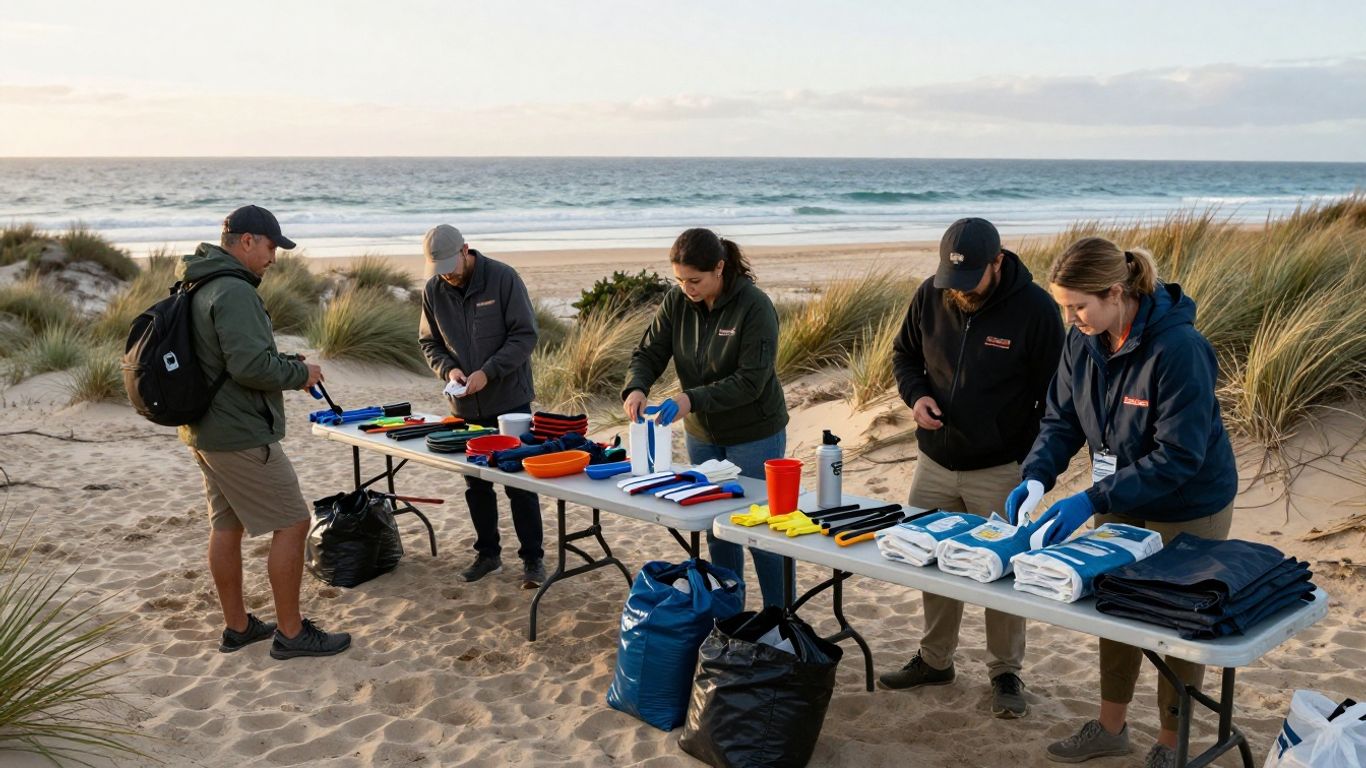
A compact field kit commonly includes:
- Protective gloves in several sizes
- Bags or buckets suited to different waste types
- Grabbers, tongs, and hand tools where appropriate
- High-visibility clothing or clear team identifiers
- Scales, tally sheets, and pens for recording results
Set the kit out before volunteers arrive so you can explain how each item should be used. Do not assume that a tool designed for ordinary litter is suitable for hazardous or unusually heavy debris.
Arrange drinking water, shade, and sanitation
Provide drinking water and identify a shaded or sheltered place where people can take breaks. Plan access to toilets and hand-cleaning facilities, particularly for longer sessions or larger groups. Encourage volunteers to wear weather-appropriate clothing, sun protection, and enclosed footwear. These basic arrangements help people stay comfortable without turning the cleanup into an endurance exercise.
Confirm transportation and disposal options
Decide how filled bags, bulky items, and sorted materials will travel from the beach to their final destination. Confirm whether the council, waste contractor, recycling facility, or site manager will accept the materials and whether any items need separate handling. Do not leave bags beside a public bin unless that arrangement has been approved. A collection plan should be in place before the first volunteer picks anything up.
Recruit and prepare volunteers
People are more likely to attend when the invitation is specific and the event appears well organised. Explain the location, timing, physical demands, equipment, and safety expectations in plain language. Give volunteers an easy way to register and ask questions. Clear preparation also helps you estimate numbers rather than planning around vague expressions of interest.
Choose effective outreach channels
Use channels that already reach people connected with the beach, such as local community groups, schools, workplaces, clubs, newsletters, and social media pages. Ask partner organisations to share the same event details rather than rewriting them in different ways. If the site has a regular user community, personal invitations can be especially effective. Keep the message focused on what people need to know to decide whether the event suits them.
Share registration and event details
Include the meeting point, start and finish times, access information, age or supervision requirements, what to wear, and what equipment will be supplied. Explain whether the event may be postponed and how that decision will be communicated. Ask about accessibility needs and relevant participation information early enough to make reasonable arrangements. A short reminder shortly before the event can reduce confusion on the day.
Assign team leaders and task areas
Give each team leader a defined stretch of beach, a collection point, and a way to contact the event lead. Keep groups small enough for leaders to notice hazards and answer questions. You may also assign separate roles for check-in, equipment, first aid, waste recording, and transport. Clear responsibility means fewer people assume someone else is watching the same task.
Give a safety and sorting briefing
Bring everyone together before collection begins and demonstrate safe lifting, tool use, hand hygiene, and the local sorting system. Explain which items must be left alone and how volunteers should report them. Ask team leaders to repeat the key points when groups reach their areas. Keep the briefing short, practical, and easy to hear over wind and surf.
Run the beach cleanup efficiently
A smooth event has a visible starting point, a clear work pattern, and a planned finish. Stay available rather than becoming absorbed in one small patch of sand. Check in with team leaders as conditions change and redirect people when an area is complete. The aim is not simply to collect the most material; it is to collect useful debris without creating new risks or disturbing the coast.
Set up check-in and supply stations
Place check-in where it is easy to find without blocking paths or access for other beach users. Keep spare equipment, water, first aid, recording materials, and waste containers nearby but separate from the main walking route. Mark the final bag drop-off point and make sure volunteers know how to return equipment. A tidy station gives you a practical base for questions, breaks, and departures.
Divide volunteers into manageable groups
Use the number of leaders and the shape of the beach to decide group sizes. Give each group a boundary, a collection method, and a return point. Ask leaders to keep people within sight where possible, especially around rocks, water, roads, or dense vegetation. Rotate demanding tasks and allow breaks rather than expecting everyone to work continuously.
Collect litter without disturbing habitats
Ask volunteers to stay on established access routes where possible and avoid trampling dunes, nesting areas, wrack lines, and low vegetation. Some natural material belongs on the beach and should not be removed simply because it looks untidy. Use hand tools carefully around plants and animals, and stop when debris is embedded in a sensitive area. The cleanest-looking result is not always the most environmentally responsible one.
Handle hazardous or unusual items safely
Create a clear stop-and-report rule for anything sharp, pressurised, leaking, biological, or otherwise unfamiliar. Keep people away from the item, note its location, and contact the relevant site manager or emergency service according to the situation. Do not open containers or pull tangled material from places where doing so could cause injury. Record the item separately so it is not mixed into ordinary waste.
Sort, document, and dispose of collected waste
The final stage turns a pile of litter into information you can use. Sort materials in a controlled area away from public paths and food or drinking water. Keep bags stable, label them clearly, and use the same categories at future events where possible. Accurate records do not need to be elaborate, but they do need to be consistent.
Separate recyclables, trash, and special materials
Follow the disposal categories provided by the local authority or waste contractor rather than relying on assumptions about what can be recycled. Keep sharp, hazardous, chemical, medical, and unusual items separate from general rubbish. If an item cannot be identified safely, set it aside for advice. Do not place contaminated or mixed material into a recycling stream simply because it appears to be made from a recyclable substance.
Weigh and count the collected debris
Choose one measurement method and use it consistently. You might record the number of bags, the weight of each waste stream, or counts of selected litter types. Note whether the figures include material from the whole event or only a defined section. Record the time, location, volunteer numbers, and any unusual conditions alongside the measurements so they remain meaningful later.
Record common litter types and possible sources
Use a tally sheet while sorting to capture repeated items such as drink containers, food packaging, fishing line, cigarette ends, or fragments of foam. Avoid claiming a source unless the evidence supports it; nearby drains, access paths, and fishing areas may suggest possible pathways rather than proving where litter began. Photographs can help document unusual concentrations without requiring you to keep every item. These observations can guide future prevention work.
Follow local disposal and recycling rules
Confirm collection times, transfer requirements, and accepted materials before the event. Arrange for bags to be removed promptly, especially in hot weather or where animals could access them. Keep records of where special materials were referred and who accepted them when that information is available. Proper disposal is part of the cleanup, not an optional task after the volunteers have gone home.
Measure results and improve future cleanups
A cleanup becomes more valuable when you use its results to make the next one better. Review both the visible outcome and the way the event operated. Ask what took longer than expected, which supplies ran short, and where volunteers needed more guidance. Small adjustments can improve safety, participation, and the quality of your records.
Calculate participation and waste-removal metrics
Compare the number of registered and attending volunteers, the time worked, the area covered, and the amount or categories of waste collected. Simple measures such as bags per group or weight per hour can help you plan future logistics, provided you note differences in site conditions. Avoid treating one event as a universal benchmark. The figures are most useful when collected in the same way over time.
Share results with volunteers and the community
Send a short follow-up message that thanks people and explains what was collected, where it went, and what you learned. Share photographs only with appropriate permission and avoid publishing personal details. If you report quantities, explain how they were measured so readers can understand the result. Honest reporting builds trust, including when the event uncovered problems that need more work.
Identify recurring pollution patterns
Compare your records with earlier cleanups and look for repeated locations, materials, or seasonal changes. A cluster near a drain may justify a conversation with the local authority, while recurring fishing debris may call for outreach to relevant users of the area. Treat patterns as prompts for investigation rather than proof of blame. The goal is to reduce future litter, not simply document it.
Build partnerships for ongoing coastal stewardship
Invite site managers, local groups, schools, businesses, researchers, and community organisations to discuss practical follow-up actions. Agree on who can provide equipment, advice, transport, data support, or a future meeting place. Keep responsibilities specific and realistic so the partnership does not depend on one organiser doing everything. Regular, modest cleanups can be easier to sustain than occasional events planned without local support.
Conclusion
A successful beach cleanup depends on thoughtful preparation as much as the collection itself: define the area, check conditions, protect volunteers and habitats, manage waste properly, and record what you learn. When you review each event honestly, your next cleanup can be safer, more focused, and better connected to the needs of the coast.