Key Takeaways
A successful beach clean up guide starts well before you arrive at the shoreline. Good planning keeps volunteers safe, makes the work easier to measure, and helps you prevent litter from returning.
- Choose a manageable area and set clear, measurable goals.
- Check permissions, tides, weather, hazards, and waste arrangements.
- Give volunteers simple roles and practical safety instructions.
- Use reusable equipment and sort collected waste carefully.
- Record results so future cleanups can target recurring litter sources.
Define your cleanup goals and scope
A clear scope gives your event a useful shape. Decide which stretch of beach you will cover, what kinds of litter you expect to find, and how you will know the cleanup has made a difference. Keep the plan realistic for the people, time, and equipment available.
Choose a beach and cleanup area
Start with a site visit rather than relying on a map alone. Look for safe access, a practical meeting point, nearby toilets if available, and a place where filled bags can be held without blocking pedestrians. Mark the exact shoreline, dunes, paths, and other areas that volunteers should or should not enter.
A smaller, well-defined zone is usually easier to supervise than an entire beach. Speak with the local council, land manager, or coastal group about current conditions and any existing cleanup plans before you settle on the location.
Set measurable objectives
Your objectives might include clearing a particular section, recording the most common litter types, or removing a defined number of bags without disturbing habitat. Avoid targets that encourage volunteers to rush or collect unsafe items. Useful records matter just as much as a visibly cleaner shoreline.
Write the objectives in plain language so every team leader can explain them consistently. If this is a recurring event, use the same measures each time where possible, making changes easier to see.
Select a date, time, and duration
Choose a time that gives people enough daylight and leaves a sensible margin before changing tides or forecast heat. A short, focused session can work well for families, while a larger group may need a longer event with a break and staggered zones.
Use a simple planning comparison before you announce the date:
| Planning factor | Earlier session | Later session |
|---|---|---|
| Heat exposure | Often lower | May be higher |
| Available daylight | More time after the event | Less time for a final check |
| Tide position | May expose different debris | May change access to wet sand |
| Volunteer availability | May suit early risers | May suit families and workers |
The best choice depends on the site, season, tide, forecast, and your volunteers. Publish the start and finish times clearly, and include a cancellation or postponement process.
Identify local environmental conditions
Visit the area after recent weather if you can. Note slippery rocks, unstable dunes, nesting areas, strong currents, flood-prone access points, fishing gear, and sections where the sand becomes difficult to cross. Ask local authorities or coastal organisations about seasonal restrictions and wildlife activity.
Conditions can change between your site visit and event day. Build a final check into the morning of the cleanup so you can shorten the route, move the meeting point, or postpone if the beach is not safe.
Handle permits, safety, and logistics
Permission and preparation protect both volunteers and the place you are cleaning. Requirements vary between councils, parks, reserves, and privately managed land, so do not assume that a public beach needs no approval. Confirm who is responsible for the site, how waste must be handled, and what information organisers need to provide.
Check local permits and regulations
Contact the relevant council, land manager, or parks authority well before the event. Ask whether you need approval, insurance, a booking, limits on group size, or special arrangements for vehicles and waste collection. Keep written confirmation and share any conditions with team leaders.
Also check rules about access, temporary equipment, photography, commercial activity, and handling unusual debris. Following local requirements makes the event easier to coordinate and avoids passing responsibility to volunteers on the day.
Plan for tides, weather, and hazards
Check a reliable local forecast and tide information close to the event. Plan a clear retreat point if water rises, and decide in advance what conditions will trigger a postponement. Heat, sun, wind, rain, unstable ground, broken glass, fishing hooks, and discarded containers all need to be covered in the briefing.
Do not send volunteers into surf, waterways, cliffs, thick scrub, or unstable dunes to retrieve litter. A missed item is preferable to an avoidable injury or habitat disturbance.
Prepare first-aid and emergency procedures
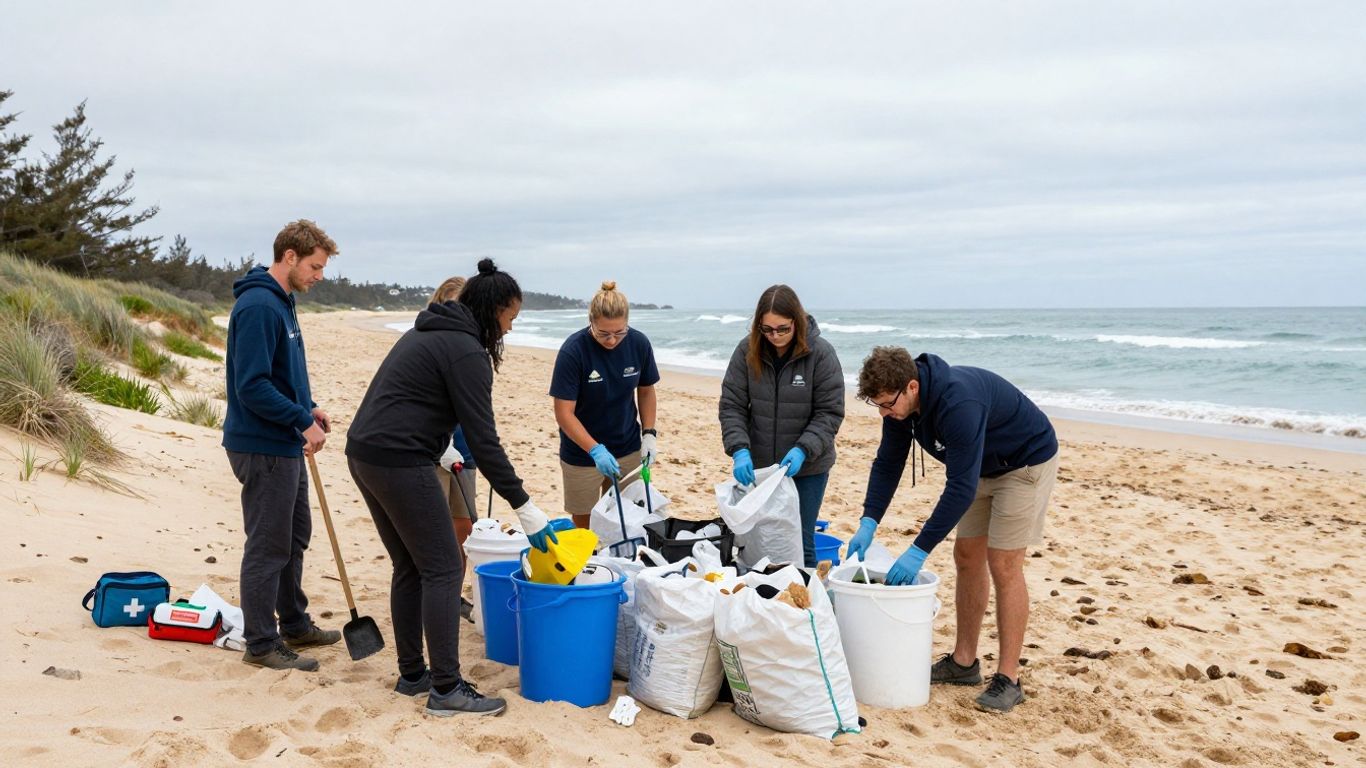
Have a stocked first-aid kit, charged phones, drinking water, and a clear way to summon help. Record the meeting point and the nearest suitable access route for emergency services, then make sure team leaders know them. Keep an attendance record so you can account for everyone when the event ends.
A short emergency plan should cover these practical points:
- Who stops the activity and contacts emergency services.
- Where volunteers meet if the group must leave the beach.
- How an injured or separated participant is reported.
- Who carries the first-aid kit and attendance record.
The plan should be simple enough to use under pressure. Explain that volunteers must report injuries, unsafe items, lost children, and sudden weather changes immediately rather than trying to manage them alone.
Arrange waste disposal and transportation
Confirm before the cleanup where rubbish, recyclables, and unusual items will go. Ask the waste provider or council about bag types, maximum weights, collection times, and whether fishing line, gas canisters, batteries, or other hazardous items need separate handling. Arrange suitable transport without overloading private vehicles.
Keep waste away from stormwater drains and make sure bags cannot roll back onto the beach. A named person should remain responsible for the collection point until everything has been removed or accepted by the relevant service.
Recruit volunteers and assign responsibilities
People are more likely to attend when the invitation explains exactly what will happen. Tell them where to meet, how long the activity lasts, what to wear, and whether children can participate with supervision. Clear roles also prevent the organiser from trying to answer every question while the cleanup is under way.
Promote the cleanup to the community
Share a short, practical event description through local groups, schools, community centres, workplaces, and coastal networks. Include the date, meeting point, access information, expected conditions, age guidance, and what participants should bring. Ask people to register where possible so you can estimate equipment and waste capacity.
Avoid promising a particular amount of litter or a guaranteed outcome. Invite people to care for a defined place and explain that observations will help shape future work.
Estimate volunteer capacity
Start with the area you can safely supervise, then decide how many people each team leader can reasonably support. Allow for no-shows, late arrivals, families who need extra guidance, and volunteers who may only be able to work for part of the session.
If interest exceeds capacity, create a waiting list or offer another date. A smaller group with enough gloves, bags, supervision, and transport will achieve more than a crowded event with poor coordination.
Assign team leaders and check-in roles
Choose people who can communicate calmly, recognise hazards, and keep their zone moving without pressuring volunteers. Give one person responsibility for registration and attendance, another for supplies, and another for the waste station if the event is large enough to need separate roles.
Write down each responsibility before the day. Team leaders should know their zone, boundaries, reporting process, emergency meeting point, and the items volunteers must leave alone.
Prepare instructions for families and groups
Families and organised groups need a simple explanation of supervision, suitable tasks, and boundaries. Children can collect light, obvious litter with an adult nearby, but they should not handle sharp objects, unknown containers, fishing gear, or anything contaminated.
Tell group leaders to keep participants together and return regularly to the sorting point. A friendly, specific briefing helps adults make safe choices without making the event feel restrictive.
Gather supplies for an efficient cleanup
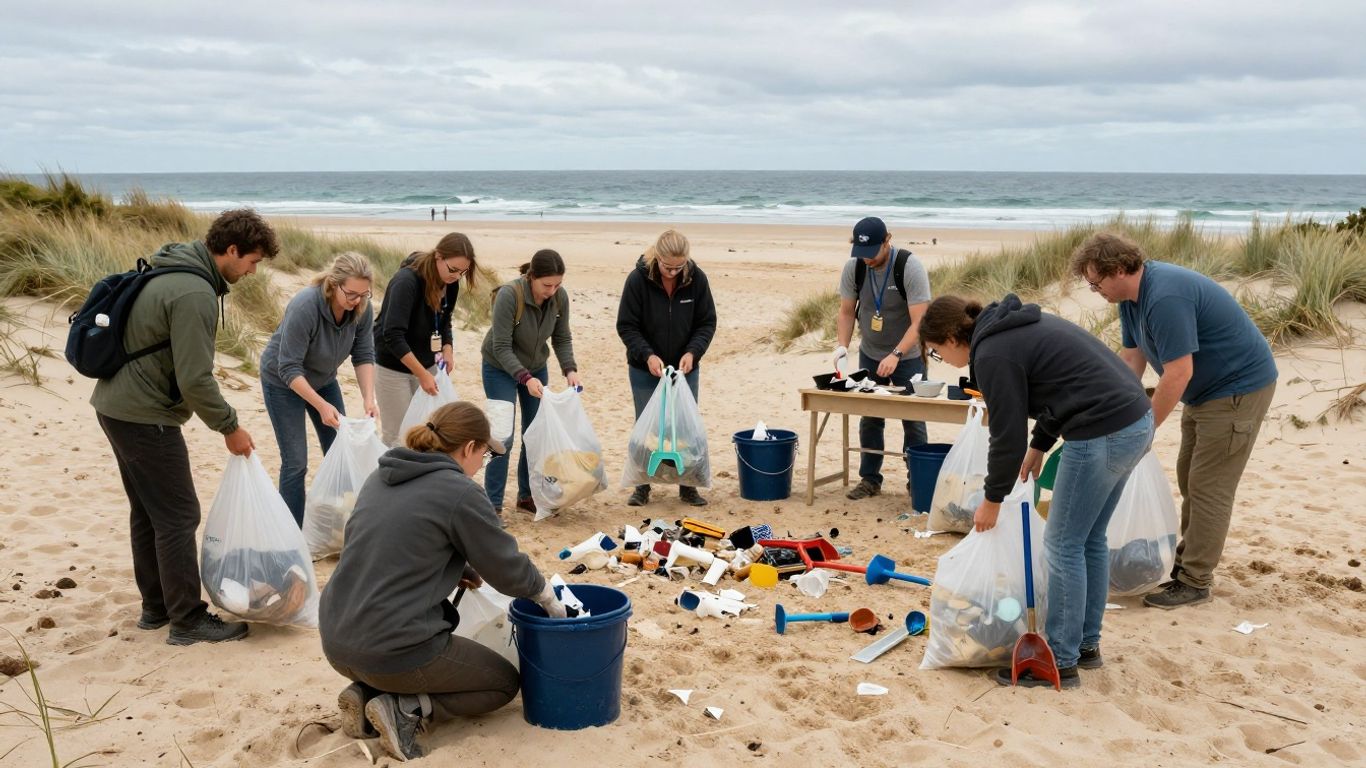
The right equipment reduces bending, protects hands, and keeps collected material under control. Borrowing, sharing, or reusing supplies can also lower the event’s footprint. Lay everything out before volunteers arrive so you can spot shortages early.
Choose reusable collection equipment
Use durable buckets, tubs, litter pickers, hand tools, weighing equipment, and collection crates where they suit the site. Choose tools that volunteers can clean and store for the next event. Bring only equipment appropriate for the beach, since heavy tools can damage sand, plants, or compacted habitat.
Test grabbers and handles before the cleanup. Damaged equipment can slow the work or create a new safety problem.
Provide gloves, bags, buckets, and grabbers
Provide gloves in suitable sizes, sturdy bags, buckets, and grabbers, with replacements available. Keep separate containers for general litter, recyclables where accepted, and items that need special handling. Encourage volunteers to carry manageable loads rather than filling bags until they are difficult to lift.
Label collection points with simple words or colours if that helps people sort correctly. Do not ask participants to take hazardous items home or place them in ordinary household bins.
Set up sorting and weighing stations
A sorting station gives you a consistent place to check bags, separate accepted materials, and record findings. Set it on stable ground away from the tide line, paths, and sensitive vegetation. Keep scales level and protect paper records from wind and dampness.
Explain the process before the first bags arrive. When volunteers understand where each item goes, the final count is quicker and the data is less muddled.
Limit single-use materials
Use washable signs, reusable clipboards, refillable water containers, and digital registration where practical. If disposable materials are necessary, choose the smallest reasonable amount and plan how they will be disposed of afterwards.
This approach makes the cleanup itself consistent with the care you are trying to encourage. It also leaves you with more equipment for the next event instead of another pile of event waste.
Teach volunteers how to collect litter responsibly
A short safety briefing should happen before anyone enters the cleanup zone. Demonstrate how to use grabbers, where to place full bags, and which items must be reported rather than collected. Keep the language direct, especially when children or first-time volunteers are present.
Explain safe handling practices
Tell volunteers to wear enclosed footwear where appropriate, use gloves, avoid touching their face while working, and wash their hands after the cleanup. They should never compact bags with their hands or reach blindly into containers, vegetation, driftwood, or rocks.
Ask everyone to work at a comfortable pace and stay aware of vehicles, bikes, waves, and other beach users. A team leader should be easy to find and should make decisions about anything uncertain.
Separate recyclable and nonrecyclable waste
Sorting should follow the instructions of the local waste service rather than assumptions about what is recyclable. Rinse or clean items only if the receiving service allows it, and keep contaminated material separate. Record what you actually separated, not what you hoped would be accepted.
Clear categories make the final tally easier to understand. If local services do not accept a material, place it with general waste according to their directions rather than sending it into an unsuitable recycling stream.
Manage sharp, hazardous, and unusual items
Volunteers should stop and alert a team leader when they find needles, ammunition, chemicals, sealed containers, gas cylinders, medical waste, large fishing gear, or anything leaking. Do not touch, open, move, or transport an item unless the responsible authority has given clear instructions.
Take a photo from a safe distance if useful, note the location, and keep people away until the item is assessed. The same rule applies to dead animals or objects that may contain wildlife.
Protect wildlife, dunes, and sensitive habitats
Stay on established paths and firm sand where possible. Do not remove natural driftwood, shells, seaweed, eggs, nests, or living creatures, and never enter fenced or marked habitat. If litter is tangled in vegetation or attached to an animal, report it to the appropriate local authority or wildlife service.
Leave a buffer around resting birds and other wildlife. A clean beach is not simply one with fewer visible objects; it is also a beach where natural processes and living areas have not been damaged by the cleanup.
Run the beach cleanup step by step
A predictable event rhythm helps people settle in quickly. Start with registration and a clear briefing, move through defined zones, then return to the sorting point for records and a final inspection. Keep a visible organiser or team leader available throughout.
Set up registration and orientation
Arrive early enough to place supplies, confirm the waste area, and check the access route. Record attendance, give each person a short safety explanation, and show where to return full bags and report unusual items. Hand out equipment only after participants understand the boundaries.
Keep the opening brief but useful. People should leave orientation knowing what to collect, what to avoid, who to ask, and when to return.
Divide the shoreline into manageable zones
Use landmarks, paths, access points, or temporary markers to give each team a clear area. Avoid overlapping routes, and leave enough space for teams to work without crowding one another. Assign a leader to each zone and make the boundaries easy to explain.
Zones also make your results more useful. If one section consistently contains more fishing gear, food packaging, or storm debris, you can revisit that location with a more targeted plan.
Track collected waste and notable debris
Ask teams to bring material back regularly rather than creating large, unattended piles. Record broad categories, quantities, weights, and unusual findings using the same method across all zones. Note the location and condition of items that may point to a recurring source.
Keep the recording process practical enough that it does not stop the cleanup. A short form, consistent categories, and one person checking entries can produce more useful information than a complicated survey that volunteers abandon halfway through.
Close the event with a final site check
Bring teams back at the agreed finish time and confirm that every participant has returned. Check the shoreline, access paths, sorting area, and temporary markers for missed litter or equipment. Remove all bags and supplies, and leave the site ready for ordinary beach users.
Thank volunteers with a specific account of what they contributed. Ask team leaders to report hazards, access problems, and improvements for the next event while the details are still fresh.
Measure results and build long-term impact
A cleanup becomes more valuable when you learn from it rather than treating it as a one-off task. Good records show where effort was spent, what debris keeps appearing, and whether your approach needs to change. Share findings honestly, including limitations and items that could not be safely removed.
Record waste types, weights, and quantities
Choose a consistent recording method before the event. You might count items by category, weigh filled bags, or record notable objects separately, but avoid mixing methods from one cleanup to the next without explaining the change.
Record the date, site, area covered, volunteer numbers, weather conditions, and disposal arrangements alongside the waste figures. These details give future organisers context when they compare results.
Share results with participants and partners
Send volunteers a short follow-up message with the area covered, broad waste categories, notable findings, and any next steps. Share relevant information with the council, land manager, local coastal group, and waste provider. Do not exaggerate the result or present one event as proof that the wider litter problem has been solved.
A transparent update helps people see where their effort fits. It can also encourage partners to provide better access, equipment, collection services, or advice for future cleanups.
Identify recurring sources of beach litter
Look for patterns in both the records and the physical setting. Food packaging near access points may suggest overflowing bins or takeaway use, while fishing line, rope, or floats may need a different conversation with local users. Storms, overflowing drains, construction, and poor storage can also move rubbish towards the coast.
Treat these patterns as clues, not proof. Confirm them with the relevant authority or community group before proposing a specific prevention measure.
Plan follow-up cleanups and prevention efforts
Use your findings to decide whether the next step is another volunteer day, a smaller targeted visit, a request for better bins, a conversation with nearby businesses, or reporting a damaged facility. Keep the same core measures where possible so you can judge whether the response is helping.
Set a review date and name the person responsible for it. Consistent, modest follow-up is more useful than a large event that leaves no plan for what happens next.
Conclusion
A well-run beach clean up guide is really a plan for caring for a place over time. When you set a sensible scope, prepare for local conditions, protect volunteers and habitat, and record what you find, each cleanup becomes safer and more useful. Start with the shoreline you can manage, then let the evidence guide your next step.